
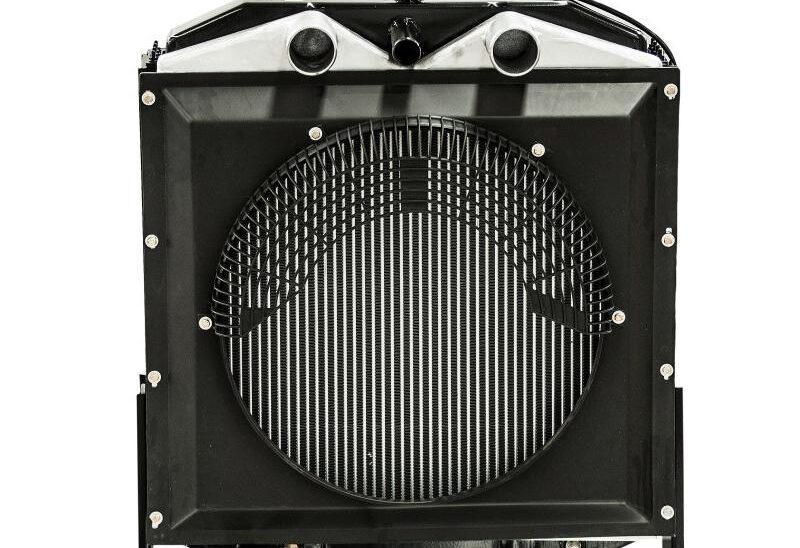
How to Choose a Generator Radiator Manufacturer: 7 Things to Check Before You Order
When a generator radiator fails, the whole set goes down. Coolant leaks, overheating and cracked cores are among the most common reasons for emergency shutdowns on construction sites, farms and standby power installations. Choosing the right generator radiator manufacturer before that happens is far cheaper than rushing a replacement order after it does.
Here are seven things worth checking before you place an order — whether you are a generator distributor, a service company or an end user.
1. Make sure the manufacturer really knows your engine
Generator radiators are engine-specific. A radiator built for a Ricardo K4100D will not fit a Weichai WP10, and cooling capacity requirements differ across engine families. A serious factory should be able to supply radiators for the main generator engine families without guessing:
- Ricardo K4100D / R4105ZD / 6105 / 6110 — 20 to 190 kVA generator sets
- Weichai WP4 / WP10 / WP13 — 100 to 500 kVA
- Weichai / Steyr WD615 / WD618 / WD12 (6126) — 200 to 800 kVA, trucks and construction machinery
We manufacture radiators for all of the above series. You can browse our Ricardo generator radiators, Weichai WP series and Weichai / Steyr WD series for typical specifications.
2. Check if they can build from your drawings or samples
You will not always have a part number. Older machines, imported generator sets and non-standard installations often have radiators with no available reference. In that case the manufacturer should be able to reproduce the radiator from your technical drawings — or directly from a physical sample.
At our factory, custom orders follow the same process as standard models: send the drawing or the old radiator, we confirm dimensions and cooling capacity, then produce. No model number is needed.
3. Ask about pressure testing
Every radiator should be pressure tested before packing — not batch-tested, but 100% unit-by-unit testing. A leakage rate that looks acceptable in production statistics still means a failed unit on your customer’s site. We pressure test every radiator before it leaves the workshop.
4. Look for a distributor-friendly MOQ
Many factories ask for hundreds of units per model, which locks small and mid-size distributors out. A MOQ of 30 units lets you test a market with one or two pallets before committing to container loads.
5. Confirm real lead time and repeat-order capacity
“20-day delivery” only matters if it holds when you reorder. Stable monthly capacity matters more than a fast first sample. Our standard lead time is 20 days, with production capacity reserved for repeat orders from distributors.
6. Export-grade packing is not a detail
Radiators travel long distances by sea freight. Weak packing turns a good product into a damaged claim. Ask for reinforced, export-grade packing designed for container shipping — and photos of how units are packed before you confirm the first order.
7. Test their response speed before you are a customer
Send an inquiry and see what happens. A factory that answers with a concrete quote within 48 hours — including from a photo of your old radiator — will likely treat your urgent orders with the same speed later. Send us a photo of your old radiator with basic dimensions and you will have a quote within 48 hours.
Send us your radiator photo
Weifang Beichen Machinery is a generator radiator factory in Weifang, Shandong, China. We supply OEM and replacement radiators for Ricardo, Weichai and Steyr generator engines from 20 to 800 kVA, custom-made from drawings or samples.
Message us on WhatsApp: +86 187 0655 0896, or email liyangyangfly216@gmail.com — send a photo of your old radiator and get a quote within 48 hours.